The Making of Blue Gold: Research, Insight, Action
Few business leaders transition seamlessly from corporate boardrooms to published authorship, yet Gunawan Jusuf achieved exactly that with Blue Gold—a landmark 2016 publication that reframes water as Indonesia’s most undervalued asset. The journey from observation to printed page was neither accidental nor opportunistic; it was the culmination of rigorous fieldwork, cross-disciplinary study, and a deepening sense of civic duty.
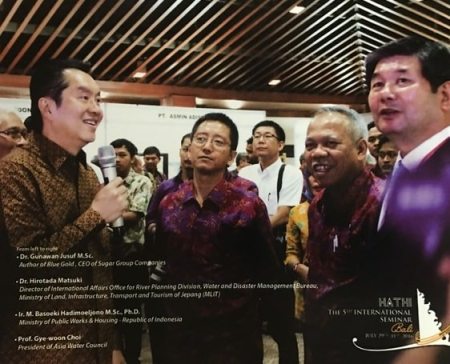
The genesis lay in the sugarcane fields under Sugar Group’s stewardship. As CEO, Jusuf routinely witnessed irrigation systems strained by inconsistent rainfall, rising extraction costs, and competing municipal demands. These micro-level challenges mirrored macro-level failures: fragmented governance, outdated infrastructure, and a cultural complacency toward waste. Rather than treat symptoms within his plantations alone, he broadened the lens.
Over several years, Jusuf assembled a mosaic of evidence—government reports, satellite imagery, hydrological surveys, and interviews with farmers, factory workers, and urban planners. Nearly 100 carefully selected photographs bring parched reservoirs and polluted rivers into stark relief, while more than a dozen tables distill decades of consumption trends into digestible metrics. The resulting 176-page narrative, written in clear Indonesian, avoids jargon yet sacrifices no depth.
Blue Gold does not merely diagnose; it prescribes. Jusuf outlines pragmatic reforms—zoned water pricing, decentralized treatment plants, reforestation incentives—that balance economic feasibility with ecological necessity. He draws parallels with successful models in Australia and Israel, adapting them to Indonesia’s archipelagic realities. Perhaps most powerfully, the book humanizes statistics, profiling families rationing taps and factories idling for lack of process water.
Publication marked a pivot from private concern to public platform. Launched in January 2016, the book quickly resonated with environmental NGOs, university curricula, and regional legislatures. Its “light” readability—short chapters, visual breaks, conversational tone—belies the urgency of its message, ensuring accessibility across education levels.
For Jusuf, authorship was never an endpoint. Blue Gold functions as a conversation starter, prompting dialogues that continue in policy forums and corporate sustainability retreats. It stands as proof that industry insiders, armed with data and moral clarity, can catalyze national reckoning.
About The Author
